Strengthening resilience is at the core of two key directional documents published by ADB in 2024: the FSA midterm review (main text, footnote 5) and the Strategy 2030 midterm review (main text, footnote 7).
The FSA midterm review includes resilience-building as one of its seven areas of emphasis and recommends that ADB country partnership strategies, projects, and programs have a strong focus on building long-term resilience through disaster risk management and climate adaptation. The Strategy 2030 midterm review identifies resilience and empowerment as one of five strategic focus areas where ADB’s work should be accelerated.
Resilience-building, e.g., through human capital development, disaster risk management,
or promotion of gender equality, is especially critical in FCAS and SIDS, which experience heightened vulnerability to external climate, health, and economic shocks. Projects in the water and urban development sector are well suited to deliver sustainable results across the multidimensional aspects of resilience-building, especially in remote SIDS, which struggle with delivery of urban services, especially to poorer populations.
Two ADB projects approved in 2024 in SIDS developing member countries (DMCs) that are firmly targeted toward building urban resilience are the Sustainable and Resilient Urban Development Project in Nauru, and the Integrated Urban Services and Resilience Improvement Project in the Marshall Islands.
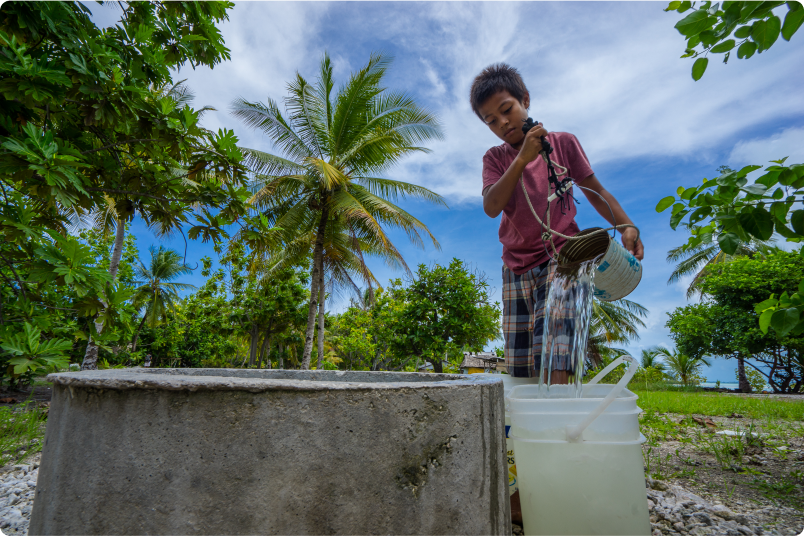
Both Nauru and the Marshall Islands experience high levels of water insecurity in the absence of diverse freshwater resources and efficient reticulated water supply systems. Many households rely on rainwater harvesting to meet their potable and non-potable water needs, leaving them exposed to water shortages during frequent and prolonged droughts. Contamination of rainwater tanks is another major issue.
Both countries also suffer from poor and poorly managed sewerage and solid waste management services. Most households in Nauru and many households in the Marshall Islands (are not connected to a sewerage system, leaving them reliant on poorly maintained septic tanks or unsanitary pit latrines. Septage removal and treatment is poorly managed. Solid waste management is another issue, with both countries dogged by overflowing landfills and inadequate waste segregation.
Poor water supply and sanitation services in Nauru and the Marshall Islands create significant health and environmental risks while negatively affecting quality-of-life. The two ADB projects address those risks and enhance the resilience of water supply and sanitation systems through constructing disaster-resilient water, sanitation, and solid waste management infrastructure while simultaneously ensuring the safety of existing non-reticulated water and sanitation systems (i.e., systems that are detached from a central network).
Project teams carefully considered the country context in designing the infrastructure for the respective projects. The project in Nauru, which lacks any reticulated water supply or sanitation system and has seen its national sanitation facility decommissioned, will construct a piped water supply system to cover more than half the urban population, a new septage processing facility, and new waste processing and recycling facilities to support the circular economy.
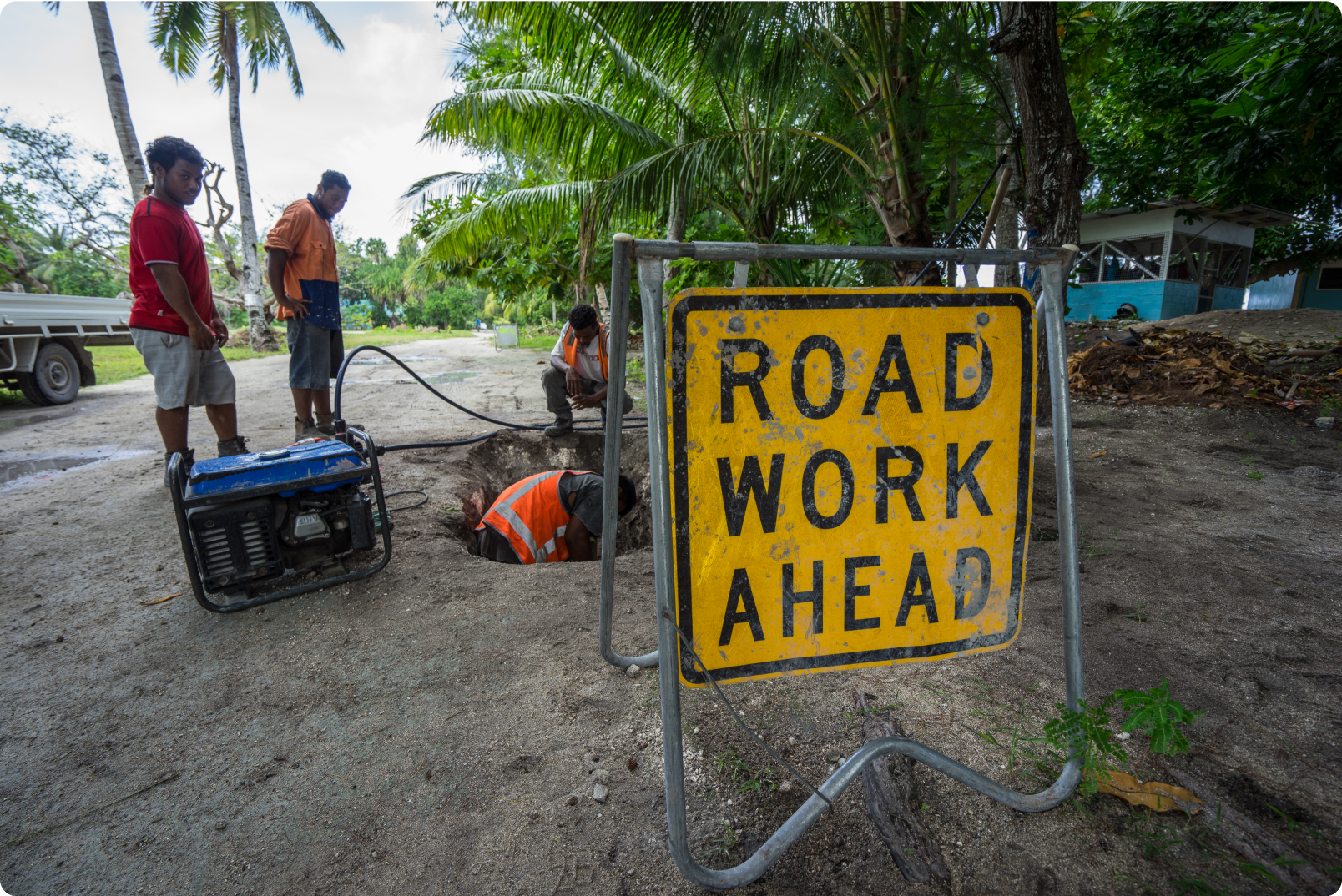
The project in the Marshall Islands, whose densely populated capital, Majuro, suffers from ageing infrastructure and a lack of drought-resisting desalination facilities, supports the construction of upgraded water treatment plants and a new desalination plant in Majuro. In the country’s other main urban center, Ebeye, poor road conditions limit access to water and sanitation facilities and expose residents to increasing climate change risks. The project addresses these access issues through components to improve road connectivity in Ebeye.
To ensure effective management, regulation, and sustainability of the new infrastructure, both projects include detailed components to build the institutional capacity of the national bodies governing water and sanitation. Both projects also support “soft” components to build locals’ resilience by bringing about behavior change in areas such as hygiene, circular economy/recycling, water conservation, and septage management.
A project feature in both Nauru and the Marshall Islands was the inclusion of the Fragility and Engagement Division (CCFE) focal points on their respective project teams to ensure an FCAS and SIDS lens in project design.2 CCFE focal points ensured the application of tailored approaches to address fragility, vulnerability, and resilience issues, e.g., sustained support to the project management unit established under ADB-funded project readiness financing for the Nauru project; and for both projects, sequencing of civil works based on capacity and institutional limitations, while applying extra layers of institutional strengthening at all phases of the project.
Principles of Tailored Approaches Exemplified: Nauru Sustainable
and Resilient Urban Development Project, and Marshall Islands Integrated Urban Services and Resilience Improvement Project
Be context-specific. Cost recovery road map and operation and maintenance (O&M) strategy address insufficient tariffs, chronic nonrevenue water, and other issues that lead to O&M funding shortfalls and poor service delivery (Marshall Islands project).
Pursue risk-informed solutions. Risk-based approach employed for procurement and project implementation (Nauru project).
Ensure broad and enduring engagement. Awareness-raising and communication activities with local communities ensure that recycling and circular economy components are sustained and that women’s involvement in project activities is increased (Marshall Islands project).
Develop capacity. Robust capacity building for the utilities, government agencies, and communities in landfill operations, asset management, community engagement, and O&M of project infrastructure (both projects).
Adapt and respond to challenging or changing situations. Development of climate change and disaster risk management plans and an early warning and response system for water-related emergencies and natural hazards to address heightened environmental risk (Nauru project).
Read More Our
Project Stories